

Black History Month invites reflection, truth-telling, and a recommitment to legacy. In our conversation with Mayor Randall Woodfin, his message was clear. Black history is not a sidebar to the American story. It is the story.

What Black History Month Means Today
“Black history means America. It means truth,” Mayor Woodfin shared. “The Black experience is rooted at the heart of the American story, both its triumphs and its scars.”
He acknowledged the current cultural climate, where division and hate can feel amplified, and emphasized the importance of this month as a corrective lens. “This is our opportunity to tell our story, to celebrate the men and women who revolutionized this country and changed our world, and most importantly, bring truth back to the conversation.”
For him, Black History Month is not symbolic. It is necessary.
From Student to Mayor: An Evolving Understanding of History
Growing up in Alabama, Black history lessons often centered on household names like Rosa Parks and Martin Luther King Jr.. While their impact is undeniable, Mayor Woodfin’s understanding of history has expanded over time.
“As a child, when we talked about Black history, it tended to revolve around familiar names,” he reflected. “And while their work was transformative, there were so many other trailblazers who deserve love.”
One of those figures is his personal hero, the Rev. Fred Shuttlesworth, a fearless Birmingham leader who defended his family, church, and city against the brutality of Jim Crow. Woodfin also points to Richard Arrington Jr., Birmingham’s first Black mayor, as a guiding example of local leadership and resilience.
“These leaders help define my walk,” he said.

The Power of Local Heroes
While national icons shaped the broader movement, it was Birmingham’s own leaders who left a lasting imprint on him. Rev. Shuttlesworth’s defiance in the face of violence. Business leader A. G. Gaston, who used his wealth and proximity to power to create economic pathways and support civil rights progress. And beyond city limits, leaders like John Lewis, whose call to make “good trouble” still resonates.
For Mayor Woodfin, these figures were not distant historical abstractions. They were blueprints.
Roots, Values, and Listening as Leadership
When asked how his upbringing shapes his leadership, his answer was simple and deeply personal.
“I got it from my mama. And grandmama.”
Service, he explained, begins with listening. “When it comes to service, I listen first. Then, I listen second. And finally, I listen third.”
His grandmother instilled in him that empathy and service are inseparable, and that empathy begins by hearing your community. His mother modeled second chances. Their home was a refuge for relatives facing hard times. Past mistakes did not define a person’s future. What mattered was repairing the present and preparing for what comes next.
That philosophy now shapes his work as mayor.
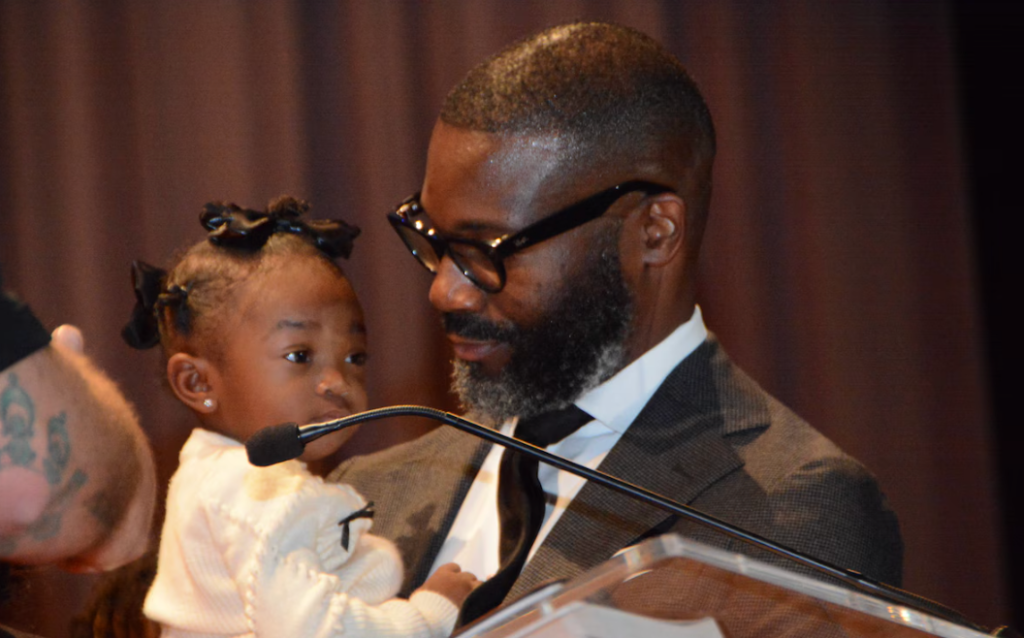
Creating a Future at Home
Beyond policy, Mayor Woodfin’s focus is deeply generational.
“I want them to have a future, and for that future to be right here in their hometown.”
Through initiatives like the Birmingham Promise, which helps pay for college tuition, and expanded internship and workforce opportunities, he aims to create a clear path from education to employment and, ultimately, to affordable housing within Birmingham itself.
He wants young people, especially Black youth, to know their city is invested in their success. Not somewhere else. Not someday. Right here.
Defining Legacy
Black history is about legacy. What was built, what was sacrificed, and what is still possible.
Mayor Woodfin is acutely aware that his role exists because of those who came before him. Shuttlesworth, Arrington, King, and countless others whose names may never appear in textbooks.
“I want to pay that forward,” he said. “I want my legacy to be the mayor who opened doors for the next generation, paying for education, guiding them to employment and housing, providing top-tier entertainment and cultural activities. I want my legacy to be a leader who made Birmingham a city they’re proud to thrive in.”
In a city as historic and complex as Birmingham, legacy is not an abstract concept. It is lived daily. And through his leadership, Mayor Randall Woodfin is working to ensure that the next chapter of Birmingham’s story is one defined not only by remembrance but by opportunity.