
Soccer is a global game, and the stories of Black history, resilience, and progress are part of a global story as well. Across continents and generations, Black history has been shaped by movement, resistance, culture, and community. In many ways, global soccer has become one of the modern stages where those histories meet.
While some people may view Black History Month as primarily focused on celebrating African American history, its impact and meaning reach far beyond borders. Black history is a global story shaped by the African diaspora, migration, resistance, culture, and community across continents and generations.
Today, Black History Month is officially recognized and celebrated nationally in the United States and Canada in February, while countries including the United Kingdom, Ireland, and the Netherlands observe it later in the year. Across the world, Black history is also recognized through cultural programming, education, and community storytelling, reflecting the global influence and contributions of Black communities throughout history.
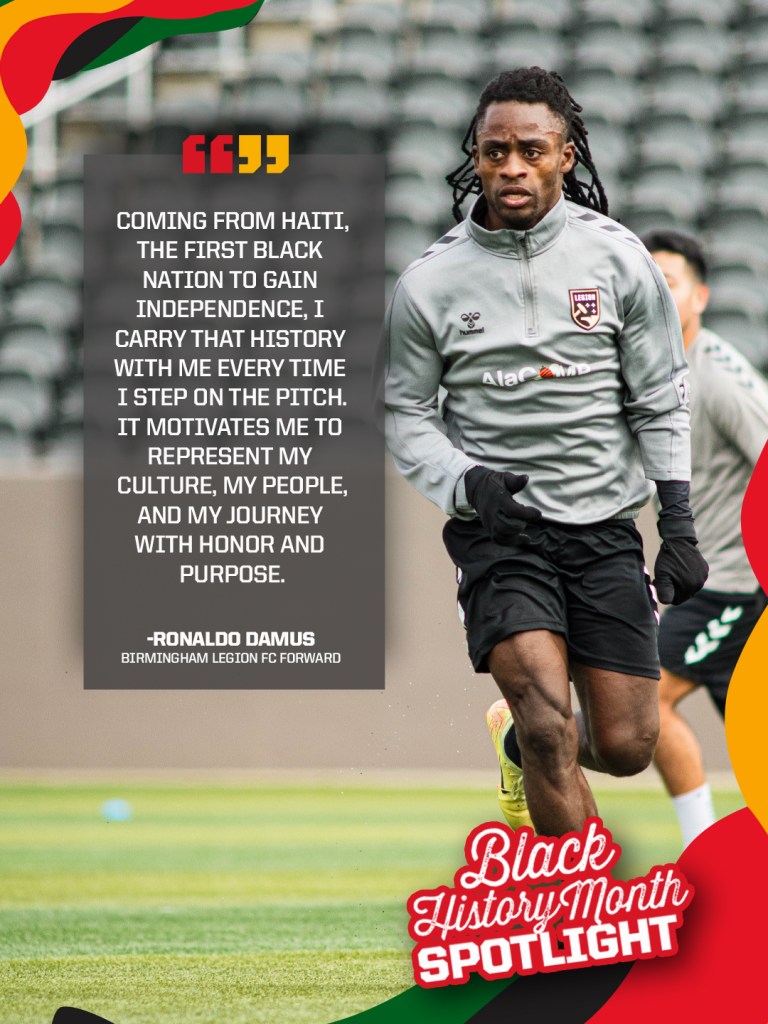
Ronaldo Damus is part of a generation of players whose stories stretch far beyond the pitch. For Damus, Haiti is not just a nationality. It is history, culture, and responsibility, carried with him into every stadium, every locker room, and every moment he steps onto the field.
Haiti holds a unique place in global Black history. In 1804, Haiti became the first Black nation in the world to gain independence following a successful slave revolution. That moment reshaped how freedom, sovereignty, and power were understood across the world and inspired oppressed communities far beyond the Caribbean.
That victory came with consequences. Haiti faced decades of economic punishment, political isolation, and global pressure from colonial powers who feared what Haiti’s success represented. And yet, Haitian culture, identity, and resilience endured.
For Damus, that history is not distant. It is living. It is something he carries every time he steps onto the pitch.
As part of our Black History Spotlight series, we sat down with the Birmingham Legion forward and Haitian international to talk about heritage, identity, responsibility, and what Black History Month means to him.
“What does Black History Month mean to you?”
For Damus, Black History Month represents reflection, pride, and responsibility.
As a Haitian athlete competing internationally, he is reminded of the struggles, resilience, and sacrifices of Black people who paved the way for future generations. Coming from Haiti, the first Black nation to gain independence, he feels a responsibility to carry that history with honor and purpose.
Every time he steps onto the field, he is representing more than himself. He is representing his culture, his people, and a history built on survival and strength.
“How has your Haitian heritage shaped you as a player and person?”
Damus credits his Haitian heritage with shaping his mentality and character.
Being Haitian teaches resilience, discipline, and humility. On the pitch, that shows through his work ethic, determination, and refusal to give up. Off the pitch, it keeps him grounded and connected to family, values, and community.
No matter where soccer takes him, including his journey in the United States, he takes pride in representing Haiti and showing what Haitian athletes are capable of on the global stage.
“Who are some Black leaders or athletes who inspire you?”
For Damus, inspiration comes from both history and sport.
Jean-Jacques Dessalines represents leadership, sacrifice, and revolutionary courage. His leadership helped Haiti become the first Black nation to gain independence, inspiring Black people and oppressed communities around the world.
In soccer, Didier Drogba represents the power of the platform. Not only for his success on the field, but for how he used his voice and influence to promote peace and give back to his community.
Following those examples, Damus is committed to giving back through his foundation, using soccer to inspire, educate, and uplift the next generation.
“What do you want young Black players to know?”
Damus wants young Black athletes to understand that their background does not define their limits.
He emphasizes belief, discipline, and trusting the process. Challenges will come, but resilience, consistency, and hard work will carry them forward.
He also reminds young players that they represent more than themselves. They represent their family, their community, and the people who look up to them. Success should always be carried with humility and purpose.
“How do you share Haitian culture with teammates?”
Damus takes pride in sharing Haitian culture with the people around him. Music is a big part of that, along with traditions and food.
One tradition especially meaningful to him is Soup Joumou, eaten every January 1. The soup symbolizes freedom and independence and dates back to Haiti’s independence from French colonial rule.
Sharing these traditions helps people better understand the pride, history, and strength of Haitian culture.
“What role has community played in your journey?”
Community has been foundational to Damus’ path.
From family support to coaches, teammates, and mentors who believed in him, he credits his success to the people who helped shape him.
That support inspired him to create his foundation and continue giving back. He wants to use his platform to create opportunity, inspire youth, and lead by example.
—
Our conversation with Ronaldo Damus made one thing clear. His journey is rooted in pride, resilience, and purpose, shaped by one of the most powerful legacies in Black history and carried forward through the global game.
This conversation is one of many sit-downs taking place throughout the month. Our goal is to learn, educate, reflect, and celebrate Black excellence and Black History Month by sharing stories, experiences, and voices that continue to shape the game, our communities, and the future.