

Chris Richards carries Birmingham with him everywhere he goes. Not just in accent or upbringing, but in perspective, purpose, and responsibility. For Richards, Black History Month is not just about reflection; it is about continuation. It is about understanding the people who came before him in both life and sport, and recognizing the responsibility to write his own chapter so the next generation has someone to look toward. Growing up in the heart of Alabama meant growing up surrounded by history. Birmingham stands as one of the defining epicenters of the Civil Rights Movement, and that reality shaped how Richards sees the world, his platform, and his place within it.
Just months away from the biggest competition in global soccer, and coming off being named the 2025 U.S. Men’s National Team Player of the Year, we sat down with the Premier League Crystal Palace starting center back, USMNT standout, and Birmingham Legion owner for our first Black History Spotlight conversation. We talked about legacy, identity, representation, and the responsibility that comes with visibility in today’s game.
“What does Black History Month mean to you?”
For Richards, Black History Month starts with honoring the people who came before him in both life and sport, and understanding the responsibility he carries to continue writing history so the next generation has someone to look toward.
Raised in Birmingham, Alabama, Richards described growing up surrounded by Black history in one of the defining epicenters of the Civil Rights Movement. That environment shaped how he sees his platform today. He also reflected on how awareness and activism have evolved, especially through social media, allowing demonstrations and voices to be seen globally and helping drive recognition, equality, and understanding.
“Growing up, who were some Black athletes or leaders you looked up to?”
Richards pointed to three figures who shaped his outlook.
Martin Luther King Jr. for leadership and courage. Barack Obama for representation and possibility at the highest level. And LeBron James for excellence, resilience, and leadership under pressure.
Richards shared how LeBron’s journey from Akron resonated with him, drawing parallels to Birmingham and the shared feeling of coming from a place rich in community, history, and challenge.
“How has your identity and upbringing shaped you?”
Richards spoke openly about being mixed race, with a white mother and black father, and navigating questions of belonging growing up. Over time, he learned to embrace both sides of who he is while also understanding how the world perceives him and how that shapes how he carries himself.
That understanding fuels his drive, particularly in challenging outdated perceptions around soccer in the United States. He spoke about how the sport has shifted away from stereotypes of being exclusive and toward what it has always been meant to be: a global game that brings people together across cultures, communities, and identities.
“Soccer has taken you across different cultures and environments. How have those experiences shaped you?”
Richards described those experiences as beautiful, reinforcing how universal the game truly is. Competing at the highest level in the Premier League with Crystal Palace, representing the United States internationally, and playing across Europe has allowed him to be part of a generation of American players redefining what is possible, while also helping bring global football culture back home as the sport continues to grow domestically.
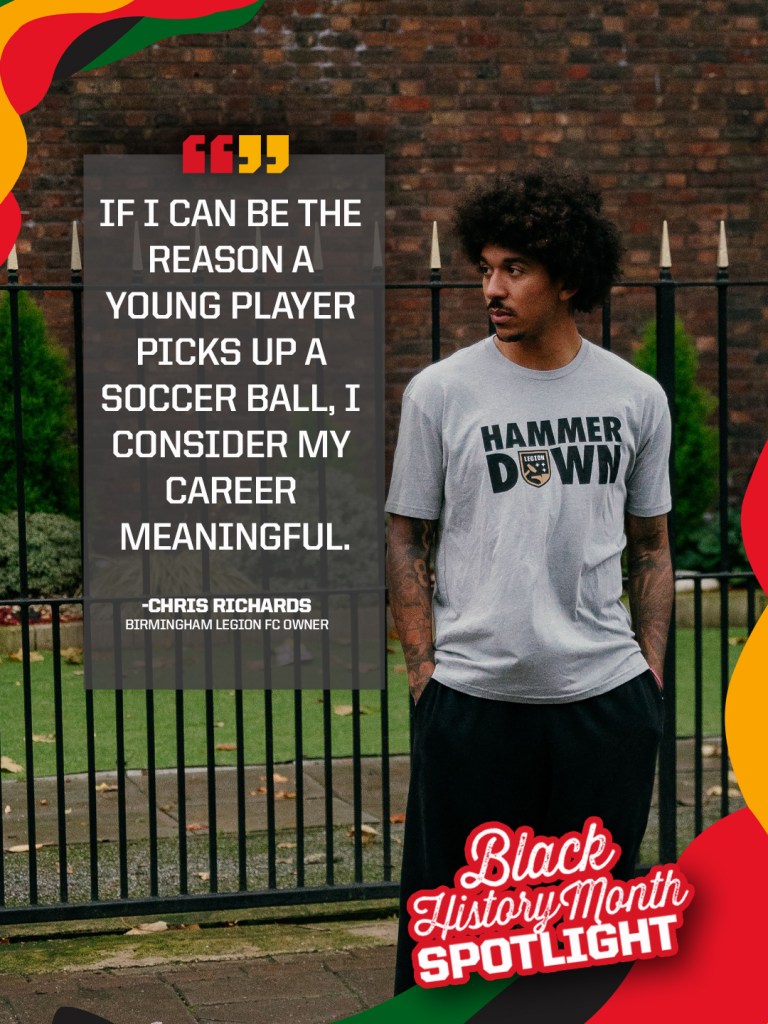
“Off the pitch, what impact do you want to have on the next generation?”
While trophies and wins matter, Richards measures success differently. If he can be the reason a young player picks up a soccer ball, he considers his career meaningful.
He spoke about the importance of being a role model not just through performance, but through how he carries himself and how he uses his voice.
“Black history is about legacy. What does legacy mean to you?”
Richards’ answer was simple and powerful. Legacy is leaving something behind for the next generation, whether that is a record, a moment, or an example someone else can build from.
—
Our conversation with Chris Richards made one thing clear. While his story is still being written, it is already rooted in purpose, representation, and a commitment to moving the game and the communities connected to it forward.
This conversation is just one of many sit downs taking place throughout the month. Our goal is to learn, educate, reflect, and celebrate Black excellence and Black History Month by sharing stories, experiences, and voices that continue to shape the game, our communities, and the future.